
Fathr Academychecklist
Your First Solo Outing With Your Child: A Practical Checklist
Choose somewhere simple, pack for your child's actual needs and give yourself permission to head home early.
3 min read
Fathr Academy · guide · 3 min read
A practical guide to picture books, comics, silly voices and conversations that follow your child's curiosity.
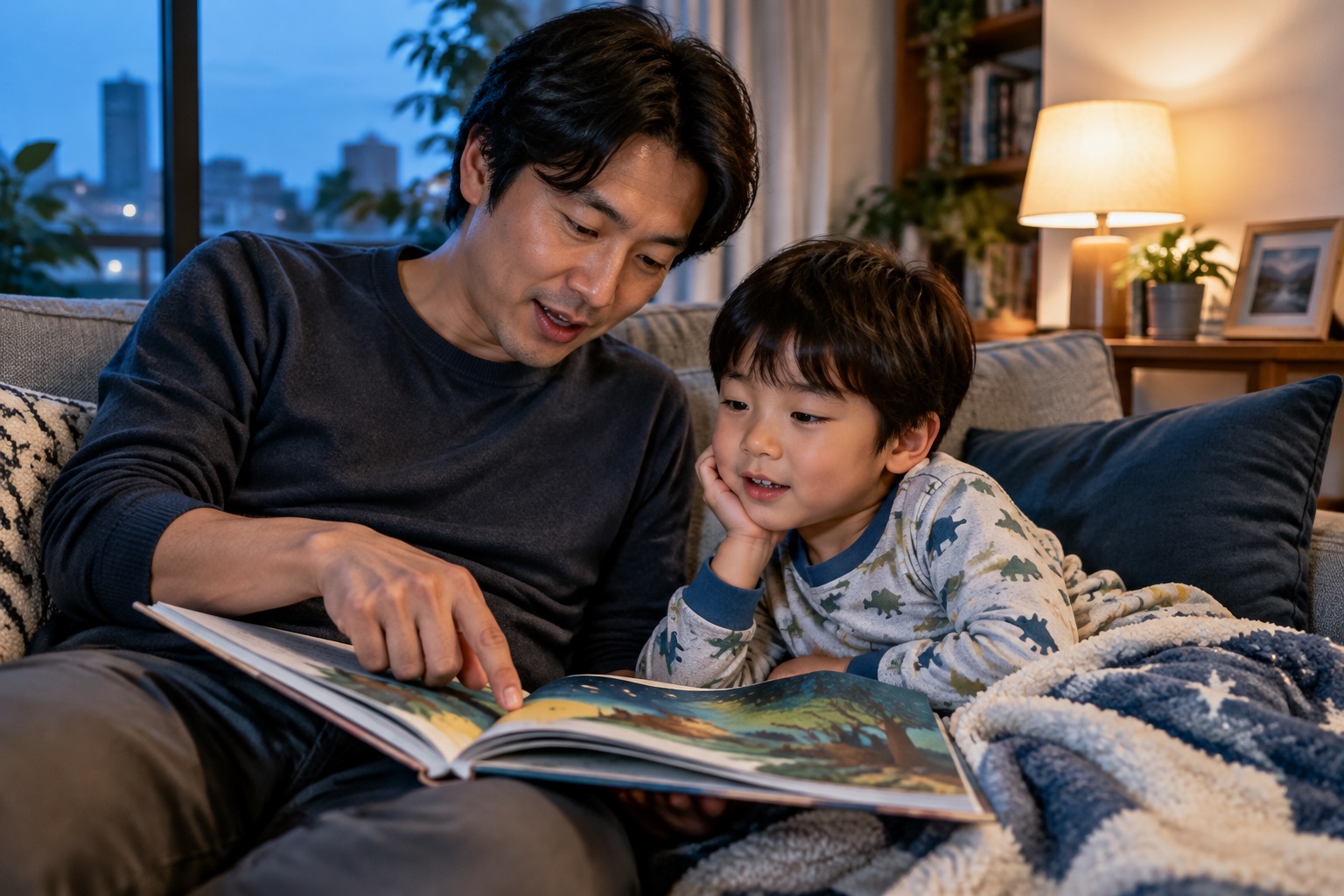
A child fascinated by dinosaurs may prefer a book of labelled pictures to a story you loved at their age. Comics, recipes and fact books can all be part of reading together. Choose something they want to open, and keep any school reading assignment separate from this relaxed shared time.
The American Academy of Pediatrics suggests talking about pictures, predicting what happens next and acting out stories. These are invitations to play with a book, not questions your child needs to answer correctly.
Let your child choose the book and settle somewhere comfortable. Start reading, but pause when they point, laugh or ask a question. You do not need to read every word or finish every page.
Independent reading does not have to mean reading alone all the time. You can take turns reading, listen to an audiobook together, or ask your child to recommend something to you. Avoid interrupting every stumble; when they want help, give it without turning the whole evening into correction.
For a reluctant reader, a short chapter, a comic strip or instructions for a project may be a better starting point than a long novel. Ask a librarian for suggestions based on interests. If reading is persistently distressing or school has raised concerns, speak with their teacher about appropriate support.
Leave a small selection where your child spends time and borrow new ones when you can. A library visit can be a shared outing with no pressure to select the most educational-looking title. Let them see you reading something you enjoy too.
End while there is still some pleasure left. 'Let's save the next bit for tomorrow' is often more inviting than insisting on another page. The next step is small: choose one book together today and let your child decide which detail deserves a longer look.
Ask Fathr about this
Get a practical answer for your own situation.
Choose somewhere simple, pack for your child's actual needs and give yourself permission to head home early.
3 min read

A starting list for the Before 18 roadmap — practical, emotional and financial.
5 min read